Baby Reindeer: A Global Phenomenon
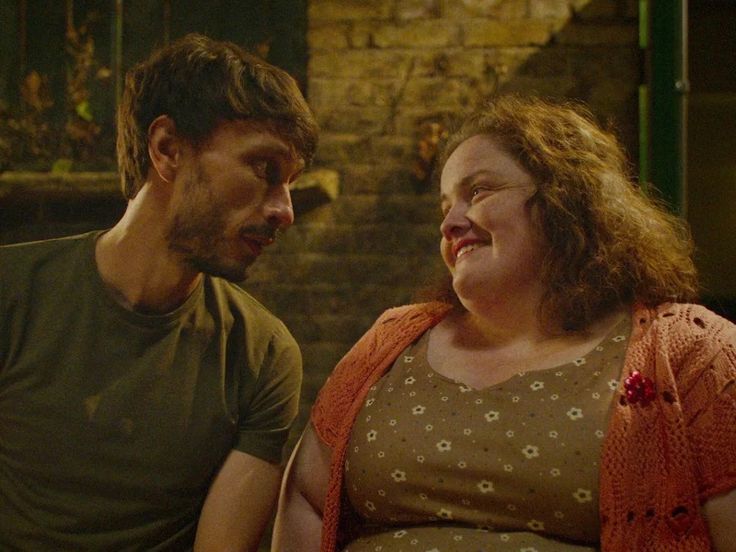
On April 11th, 2024, Netflix released Baby Reindeer: a seven-episode miniseries following a Scottish bartender getting stalked by a frequent customer. As a result, the show’s writer and star, Richard Gadd, went from being an independent comedian in Scotland to the world’s most googled man for three days straight. But in an age where Hollywood seems to believe that only sequels and mainstream writers can be a success, who is Richard Gadd? And how did his original story become a cultural phenomenon?
Origins
Gadd often refers to himself as just “a middle-class guy from Fife”. Born May 11th, 1989, he had always had a passion for storytelling, eventually studying English literature and Theater Studies at the University of Glasgow. It was during his time at university that he started getting into comedy. Gadd first performed at the Edinburgh Festival Fringe in 2011, eventually returning for his 2013 festival show: Cheese and Crack Whores, as well as his 2014 show: Breaking Gadd. Gadd’s early shows were autobiographical accounts of his own life, widely considered controversial for their dark and absurd sense of humor. Brian Logan at the Guardian remarked in 2014 that “Gadd is a capable performer, even if the story he’s telling here, and its documentary conceit, may not be right for his brand of hyper-neurotic black comedy.” In his early works, there seemed to be a disconnect between the story he was telling and the way he was telling it.
Comedic Evolution
“I enjoy alienating the comedy industry,” Gadd told the Guardian, “but I felt like I needed to alienate them less if I was ever going to take that next step.” Gadd was aware of the effect he was having on his audience; his new show, Waiting for Gaddot, aimed to change that. The show starts off empty, quiet, as the star of the show has yet to make it to the stage. A screen then plays a scripted movie of his journey trying to make it to the venue in time. The show was described as Gadd’s “compromise with the mainstream,” But Waiting for Gaddot was only the first step; his 2016 show Monkey See Monkey Do would open more doors for the young comic.
Monkey See Monkey Do
Throughout his career, Gadd was open about his struggles on the stage, often using it at his own expense. However, Monkey See Monkey Do was the first of its kind in Gadd’s portfolio: not only was it funny, but it was also vulnerable to an extent we hadn’t seen from him before. The play follows Gadd on a treadmill, training to be the “manliest man” in a fictionalized competition. However, while on the treadmill, a monkey that acts as a manifestation of Gadd’s depression and anxiety follows behind him, plaguing his thoughts. Near the end of the play, records of his therapy sessions are played for the audience, bringing the story to a solemn, vulnerable end as Gadd vocalizes his struggle to connect with other people after experiencing a sexual assault. The show met wide critical success, eventually winning the highly prestigious 2016 Edinburgh Comedy Award. Even Brian Logan, who was critical of Gadd’s earlier shows, commended the play, stating that “it was emotionally naked, strayed far beyond humor’s usual remit – and when it won the biggest prize in comedy, it was a redemption for Gadd and catharsis for his audience.” When accepting the prize in 2016, Gadd stated hopefully, “The worst thing that experience [of assault] did was take my confidence away from me. Maybe this award will help me bring it back.”
Baby Reindeer
“That was the worst part,” he told the Guardian in 2019, “It felt like I’d expunged the demons of one person who had caused me so much grief, only so that she [his stalker] could take center stage in his place. It felt so awfully ironic.” Three years later, the critically acclaimed comedian was facing misfortune once more, this time in the form of his stalker who reportedly sent 40,000 emails in harassment, and went out of her way to disrupt both his and his family member’s lives. And like before, Richard Gadd did what he did best: he turned his own tragedy into a theatrical masterpiece. Baby Reindeer first started off as a play where Martha, Gadd’s fictional counterpart to his stalker, didn’t even have an actress, and instead, she was represented by a barstool. In his own words, the play eventually “took off,” securing prizes at the 2019 Scotsman Fringe Fest Awards and the 2020 Off West Awards. Gadd had been open about his ambition to adapt the show for television, and in 2020, he finally got his chance. “It was this crazy thing,” Gadd told Jimmy Fallon, “Netflix came to me; they said, ‘Do you want to make it into a series?’” The show would go on to hit the top ten in over seventy countries, becoming one of Netflix’s most-watched shows in the platform’s history. Richard Gadd, along with it, became a global celebrity in the matter of days, cementing his legacy in the entertainment industry.
Conclusion
In an age of safe stories and even safer sequels, it is important to note that Baby Reindeer is not something a board of directors and marketing team could come up with. It wasn’t designed to be profitable; even Gadd himself was shocked at its wide success: “It’s crazy that it has had this sort of almost cross-cultural success that I never expected,” Gadd remarked, “it’s so singular, and it’s so idiosyncratic, and it’s very London, and it’s such an odd story.” However, when you start to look into Gadd’s history, it becomes all the more clear why Baby Reindeer was as successful as it was. For the past decade, Gadd has been experimenting with how to combine comedy with the tragic events of his life, creating a world so intricate that it feels real.
Baby Reindeer communicates a broader truth to large corporations: that there is nothing more marketable than humanity.
After receiving the Emmy for Best Limited or Anthology Series, Gadd stated to the crowd,
“I think no problem ever gets solved without taking some risks. Baby Reindeer shows that there’s no one right way to make a hit show. You don’t need big stars, popular stories, or long-running series to be successful. The one thing that always leads to success in TV is good storytelling. It should connect with what’s happening today. So, take chances, try new things, and don’t be afraid to explore tough topics. Sometimes you need to risk failing to succeed.”
Richard Gadd, 2024
